Fuerteventura Airport Transfer: Taxi, Bus or Car Hire?
Fuerteventura is not one holiday island but three, and they could hardly sit further apart. Between Caleta de Fuste, a short hop from the airport, and Morro Jable in the south lie almost ninety kilometres — and that distance decides your transfer more than price ever will.

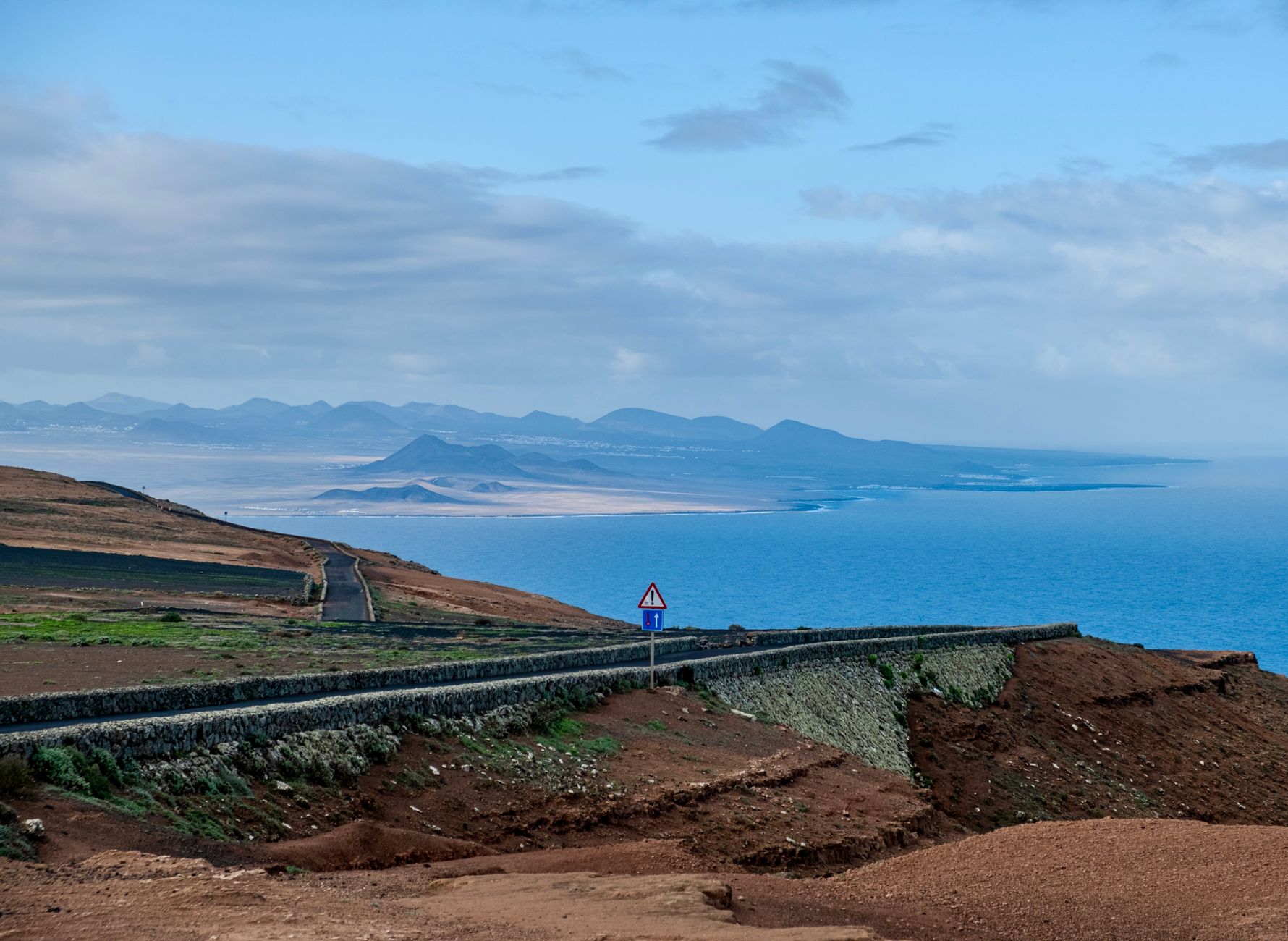
Fuerteventura has a single international airport but practically three separate holiday islands. Corralejo in the north with its dunes, Caleta de Fuste right on the airport’s doorstep, and Costa Calma and Morro Jable down south on the Jandía peninsula. Search “Fuerteventura airport transfer” expecting one clean answer and you will be disappointed — the right choice depends almost entirely on which direction you are heading.
The island is nearly a hundred kilometres long and narrow, and the airport sits on the east coast, roughly halfway between north and south. That means one resort can be twelve kilometres away and another ninety. That spread is what decides whether you stroll to the taxi rank, wait for the bus, or book a transfer in advance.
How far your resort really is
Four reference points that most of the island’s tourism hangs off, ordered by distance from the airport.
Caleta de Fuste sits around 12 kilometres out — the nearest sizeable resort of all, right on the FV-2 dual carriageway heading south.
Puerto del Rosario, the island capital, is closer still at roughly 5 kilometres. Few holidaymakers stay there, but it is the changeover point that comes up again later in this piece.
Corralejo in the north, home to the famous dunes of the nature reserve and the ferry port to Lanzarote, is about 37 kilometres away — a good half-hour’s drive on a road that stays dual carriageway the whole way.
Costa Calma, at the start of the Jandía peninsula, sits around 67 kilometres out.
Morro Jable, right at the southern tip, is the furthest of the major resorts at roughly 88 to 90 kilometres — further than any single leg among the destinations I usually compare in this series, the Mallorca airport transfer included.
Those are real road kilometres along the FV-1 and FV-2, not straight-line distance. They alone explain why a taxi to Corralejo and a taxi to Morro Jable have little in common beyond how the fare is calculated. Add to that: Costa Calma and Morro Jable themselves stretch across roughly 20 kilometres of coastline, so depending on exactly where your hotel sits within the resort, a few more kilometres come on top.
Taxi: metered, not a price list
The key difference from an island like Mallorca, right away: Fuerteventura has no published fixed-price table for journeys from the terminal. Taxis run on the meter, and there is no island-wide list you can look up in advance the way you can for the Mallorca airport transfer.
There is an airport surcharge, though, and it is worth knowing why. Because the airport sits in Puerto del Rosario while the resorts lie in other municipalities, a run from the terminal is an interurban journey — and under Canarian law interurban fares are set for the whole archipelago rather than by each town hall. So the same structure applies here as on Lanzarote, surcharge included. What I could not pin down is the exact amount: the figures in circulation disagree (one source gives €1.70 for 2025, another €2.10 for 2026) and none of them cites the regulation it came from, so I am not going to print one as if it were settled. Check the tariff card in the cab (Stand 2026). How a metered fare is generally put together — flag-fall, per-kilometre rate, waiting time — is covered in taxi fares in Germany; the principle is much the same in Spain, only the amounts differ. Neighbouring Lanzarote, by contrast, does publish an airport supplement, and which tariff governs a run from its terminal is a question in its own right — set out in taxi fares on Lanzarote.
What that means in practice: for short hops, taxis on Fuerteventura are genuinely cheap — to Caleta de Fuste or Puerto del Rosario you are talking about a handful of kilometres and a correspondingly small sum, barely worth haggling over. To Corralejo, at around 37 kilometres, the fare becomes noticeable. And to Costa Calma or Morro Jable, at 67 and nearly 90 kilometres respectively, you are effectively crossing the island — that costs whatever a journey of the best part of an hour to ninety minutes costs, however you look at it.
My practical advice: for anything beyond Corralejo, get a price before you get in, or ask at the rank for an estimate. Drivers here know the run to Costa Calma or Morro Jable by heart — they do it constantly — and will usually give you a realistic figure on request before the meter even starts. If you would rather sort it out ahead of time, one of the local dispatch firms such as Radio Taxi Fuerteventura can be reached by phone or WhatsApp and asked for a price estimate on your route — it takes the uncertainty out of the equation before you have even landed.
Two things still count in the taxi’s favour, even on the long runs: it leaves the moment you are ready, with no wait for other passengers’ flights, and it takes you straight to your accommodation rather than to a drop-off point at the edge of town.
The Tiadhe bus network
Fuerteventura’s island-wide bus operator, Tiadhe, does considerably more than its reputation among holidaymakers suggests. Fares are approved annually by the Cabildo Insular, you pay cash straight to the driver — notes up to €50 are accepted — and a ticket for most routes costs a low, single-figure euro amount (as of 2026).
The catch for arriving passengers: only one line actually calls at the terminal. Line 3 runs between Puerto del Rosario, Caleta de Fuste and Las Salinas, passing the airport on the way — it is the only bus you can board right outside arrivals. For Caleta de Fuste, that makes the bus a genuine no-change option.
For everywhere else you need a stopover: the bus station in Puerto del Rosario. From there, line 6 continues to Corralejo, lines 1 and 10 cover the long haul down to Morro Jable, and from Costa Calma onward line 5 picks up the final stretch to Morro Jable. In practice that means line 3 to the bus station, a change, then onward. With luggage after a long flight it is doable, but it is a different exercise from a direct service. For the curious: even Cofete and Punta de Jandía, right at the island’s south-western tip, get their own — if sparsely timetabled — service via line 111, which tells you something about how seriously car-free travel is taken here despite the distances involved.
Three practical things nobody tells you up front: stops are often poorly marked or not marked at all, there are no on-board announcements or displays, and timetables do not always match reality as precisely as the website suggests. A mapping app with live positions makes this far less stressful — it shows you the right stop and roughly when the next bus is genuinely due, which is worth a lot on an island without consistent signage. Discounted card schemes exist for frequent riders and residents, but for an ordinary holiday visit cash is all you need.
Pre-booked transfers — when they make the difference
With distances up to 90 kilometres, a bus network that forces a change, and a taxi with no fixed fare, booking a transfer in advance on Fuerteventura is not a fallback — for a lot of travellers it is the obvious choice, much as I set out for the long coastal runs in the Antalya airport transfer.
The advantage is always the same: the price is fixed at booking, whatever the meter or the traffic says, and the vehicle waits for you rather than the other way round. A private transfer takes you straight there with no stops; over ninety minutes to Morro Jable, that is the difference between arriving and grinding through a second leg of the journey. A shared transfer costs less but calls at several hotels en route — and on an island where Costa Calma and Morro Jable alone are some 20 kilometres apart, that can add noticeably to the journey time.
Before booking, I would check three things: whether the operator tracks your flight number and adjusts pick-up automatically if it is delayed, exactly where at the terminal you are meeting, and whether child seats are included or need booking separately. A reputable operator answers all three without making you ask twice.
And as with any package holiday, the same point applies here that I have made for both Mallorca and Antalya: check your travel documents first. On most package holidays to Fuerteventura, the transfer to your hotel is already included — precisely because the distances here can run so long, tour operators almost never skip that part of the deal. Book an extra transfer on top of that and you pay twice for the same journey, and the included one simply goes unused.
Car hire: often the better sum on Fuerteventura
Few destinations in this series justify a hire car as clearly as Fuerteventura does. The reason is the same geography that complicates the transfer: if your hotel is in Costa Calma and you fancy a day at the dunes of Corralejo, you are looking at well over a hundred kilometres there and back. With your own car that is a day trip; without one it is a booked excursion on someone else’s schedule.
Alongside the international chains at the airport, Cicar operates here too — a hire-car company with Canarian roots and a dense network of stations across the whole archipelago. Roads on Fuerteventura are well maintained for a small island, especially the main artery between Corralejo and Morro Jable.
One thing worth confirming at the rental desk before you drive off: most contracts explicitly exclude unpaved tracks, and breaching that clause can void your cover entirely if anything goes wrong. That matters most for the well-known run out to Cofete on the west coast of the Jandía peninsula — spectacular scenery, but reachable only via a dirt track that plenty of standard contracts simply do not cover. Ask about it directly if off-road excursions are on your list.
The same rule applies here as with taxis: climbing straight into an unfamiliar car after a night flight is a poor idea. Take a taxi or a booked transfer for the first evening and collect the hire car the next morning instead — the desks at the airport keep very long hours, often round the clock.
Wind, luggage, child seats — what decides in practice
Three things that play out differently here than on any old island.
The wind. Fuerteventura is one of the windiest islands in the Canaries — exactly why surfers and kitesurfers love it. For a transfer, that means waiting at an open bus stop in a stiff trade wind is less pleasant than it sounds on paper, and loose bags or hats crossing the tarmac at boarding want holding onto. Nothing to worry about, but good reason not to bury your jacket at the bottom of your case.
Child seats. Spain requires them for young children by law. A taxi will not automatically carry one; a hire car needs one booked separately, and the choice at the airport desk in high season is thinner than if you reserve online in advance. With a pre-booked transfer it is the most reliable route, provided you state the requirement explicitly when booking.
Luggage. In a taxi it usually costs nothing extra; on a bus it is purely a question of space. Four people with four large cases on the long run to Morro Jable is a case, in high season, where I would choose a private transfer or taxi over a scheduled bus with a change in Puerto del Rosario.
The mistake that costs money every year
It repeats itself across every island in this series, and on Fuerteventura the long distances make it an especially expensive one: on a package holiday, the transfer to your hotel is normally already paid for. Book a separate one at the rank or online as well and you pay twice for the same journey — and on the 90 kilometres to Morro Jable, that is not a small sum.
Check your travel documents before adding anything. Where a transfer is included, they usually spell out exactly where to meet — typically a desk with the operator’s logo in the arrivals hall. Only if you booked flight-only is the transfer genuinely your call, and then distance should decide, not the cheapest price you can find online in the moment.
What I would settle before flying
Exactly how far your hotel really is, in kilometres, not the resort name. There are a good twenty kilometres between “Costa Calma” and “Morro Jable”, and that is no small detail when choosing a transfer.
Whether the transfer is already covered by your holiday price. Two minutes in your documents, before you book anything else.
When your flight lands. The airport takes flights until late evening; buses are running nowhere near their daytime frequency by then, and for very late arrivals a taxi or booked transfer is the sensible choice regardless.
How much luggage you are actually carrying, especially if your route heads south and involves a change at the bus station.
Do not forget the return
The trip home gets underestimated on Fuerteventura more easily than the trip out, simply because all the attention on arrival day goes to getting there.
With a booked transfer, the same rule applies as everywhere: pick-up from the hotel is earlier than you think, particularly from Morro Jable or Costa Calma, where the drive to the airport alone runs to ninety minutes or two hours. Get the exact time confirmed a day or two ahead, not on the morning you leave.
Travelling back by bus, check the last service of the day before you book your return flight — not after. A scheduled bus that leaves Morro Jable for the last time in the early evening is no use at all against a flight departing at ten at night.
And for a taxi: order it through reception the evening before rather than hoping one happens to pass on departure morning — particularly in Costa Calma and Morro Jable, where free taxis cruise the streets less often than in Corralejo or Caleta de Fuste.
Unlike islands with no fixed fare, Rome runs an official, city-set flat taxi rate; the detail is under Rome airport transfer.
All prices and timetable details reflect the position in 2026; bus fares are reset annually by the Cabildo Insular, and metered taxi rates move independently of that. What does not change is this island’s basic rule: work out the kilometres to your hotel first, then choose the transfer to match — not the other way round. Stick to that order and you will land on Fuerteventura cheaper and calmer, whether your resort is twelve kilometres away or ninety. More routes and fixed fares are under Airport Transfer.
Keep reading
Airport Transfer
Mallorca Airport Transfer: Bus, Taxi or Pre-booked?
From Palma airport in 2026: bus lines A1 and A2, regulated taxi fares with a €4.65 airport supplement — and when a pre-booked transfer still wins.
Jonas Reinhardt14 August 2026
Airport Transfer
Rome Airport Transfer: Fiumicino, Ciampino, Train or Taxi?
Rome airport transfer 2026: Leonardo Express for €14, fixed taxi fares from €40 or €55, the Ciampino Airlink for €2.70 — two airports, two systems.
Jonas Reinhardt18 July 2026
Airport Transfer
Istanbul Airport Transfer: Havaist, the M11 or a Taxi into Town?
Istanbul airport transfer 2026: Havaist buses, the M11 metro, taxi fare tiers, the overcharging risk and private transfers – IST versus Sabiha Gökçen compared.
Jonas Reinhardt24 July 2026
Airport Transfer
Booking an Airport Transfer: The Small Print That Matters
Cancellation windows, free waiting time after a delayed flight, meet and greet, child seats: what the published terms of Holiday Taxis, Suntransfers, Welcome Pickups, Kiwitaxi and Blacklane actually say in 2026.
Jonas Reinhardt17 September 2026
Airport Transfer
Hurghada Airport Transfer: What the Ride to Your Hotel Really Costs
Transfers from Hurghada (HRG) in 2026: operator-published prices for shared shuttles and private cars, distances to Makadi Bay, El Gouna and Soma Bay — and what happens at a taxi rank with no working meter.
Jonas Reinhardt17 September 2026