Taxi Costs in Dubai: RTA Meter, Airport Surcharge and Careem Compared
Dubai runs a strictly regulated metered-taxi system, unlike Istanbul or Rome — but it still pays to know the details before you jump in the first car outside arrivals.

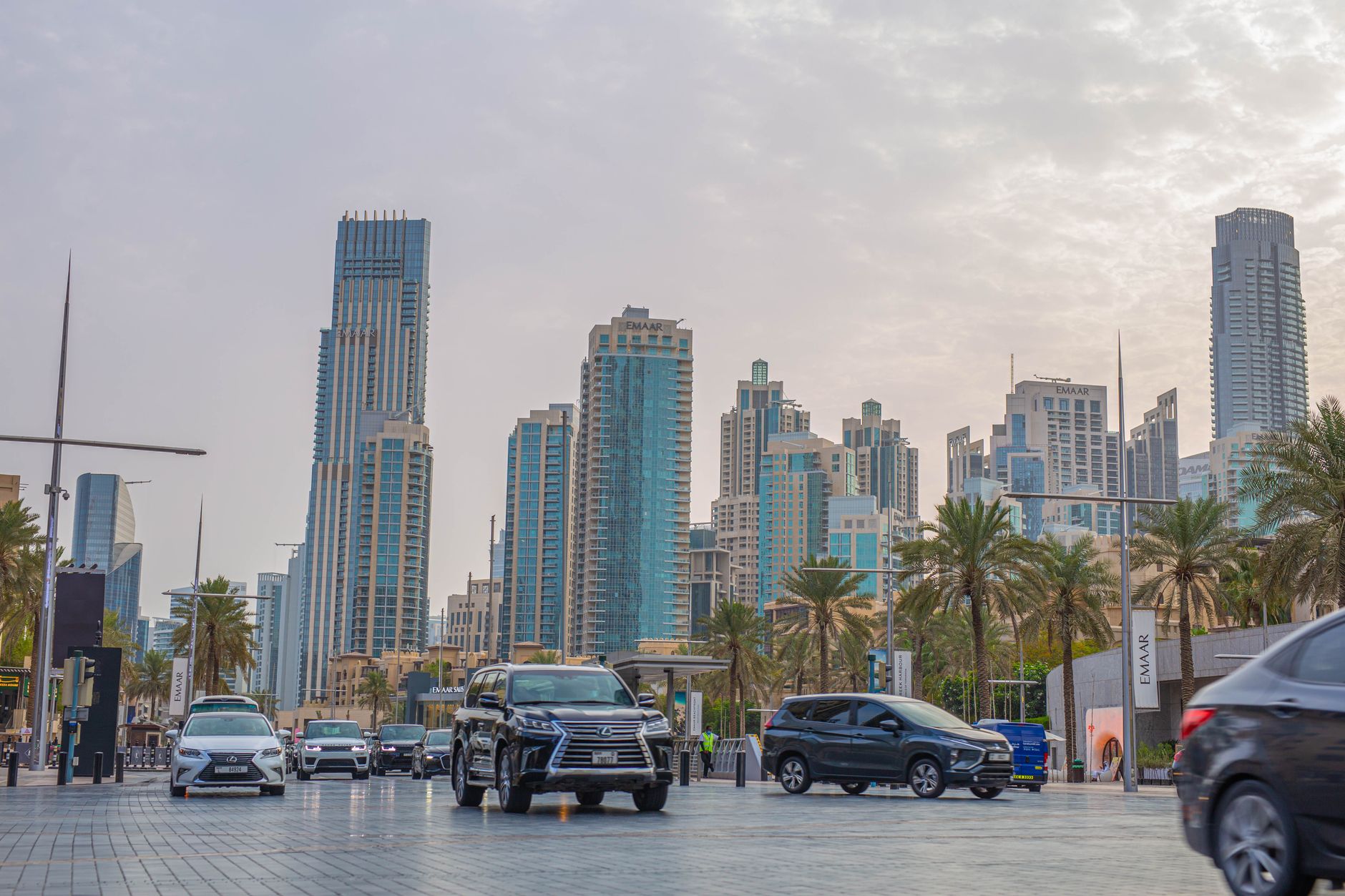
Dubai has a reputation that rarely serves German-speaking travellers well: expensive, glossy, hard to read. When it comes to taxis, that reputation is mostly wrong — fares are strictly regulated, transparently metered and, honestly, often cheaper than a taxi in Frankfurt or Munich. What’s usually missing isn’t a low fare, it’s knowing how that fare is built, where a surcharge gets added, and whether Careem or Uber genuinely beat the meter. That’s what this piece sorts out, with figures based on the official RTA tariff rather than travel-forum guesswork.
Dubai in context: how the pricing landscape differs from Europe
In Germany, taxi tariffs vary by city and county, usually overseen by local authorities — for how that basic structure works, with flag fall, per-km rate and waiting charges, see Taxitarif Deutschland. Dubai instead has a single central authority: the Roads and Transport Authority (RTA), which licenses every taxi in the emirate, sets a uniform tariff across the board, and folds the major ride-hailing apps into the same regulatory system. The result is a market that’s arguably more transparent on paper than many European cities — every licensed taxi runs on a meter, haggling isn’t part of the culture, and it’s practically impossible anyway, since drivers have no authority to set their own fare.
The contrast with destinations like Istanbul or Rome, where different taxi tiers, negotiable rates or unofficial drivers complicate the picture, could hardly be bigger. That doesn’t mean there’s nothing to know in Dubai, though — the fare structure has more moving parts than it looks at first glance, and that’s exactly where surprises tend to creep onto the final bill.
The RTA meter: flag fall, per-km rate and minimum fare
Every licensed taxi in Dubai runs on the same RTA tariff, whether it’s a cream-coloured Dubai Taxi Corporation car or one of the colour-coded vehicles from private franchise operators like Arabia Taxi, Cars Taxi or National Taxi — the livery and branding differ, the tariff and meter don’t. Hailed on the street or picked up at an official rank, a daytime fare (6am to 10pm) starts with a flag fall of roughly AED 5; at night (10pm to 6am) it’s slightly higher, around AED 5.5 (as of 2026). Book the taxi by phone or through the RTA app instead of hailing it, and a booking fee gets added, pushing the effective flag fall to around AED 12.
The per-kilometre rate sits at roughly AED 1.82 to 1.96, depending on vehicle class and the RTA’s current published rate — the authority adjusts this figure occasionally, which is why I’m giving a range rather than a single decimal. On top of that comes a waiting-time charge of about AED 0.50 per minute, which ticks over automatically in traffic or at lights, plus a minimum fare of around AED 12 — no ride in Dubai gets billed for less than that, even a two-street hop. Converted to euros, the per-km rate works out to roughly 45–50 cents, noticeably below what many German cities charge per kilometre. A short inner-city hop of around 5km — say, from the Dubai Mall to the Burj Al Arab — typically lands between AED 20 and 30 in light traffic, roughly €5 to €7.50.
The airport surcharge: DXB vs DWC
Travellers arriving from Germany almost always land at Dubai International Airport (DXB), the big hub with Terminals 1, 2 and 3, while the smaller second airport, Al Maktoum International (DWC), south of the city, mainly handles budget carriers and freight. Both airports add a surcharge on top of the standard tariff, since taxis wait at dedicated ranks and the fee accounts for waiting time and the airport operator’s access charges. From DXB that surcharge runs at around AED 25; from DWC it’s roughly AED 20 (as of 2026) — it’s added automatically to the metered fare, so there’s nothing to negotiate or pay separately; it simply appears on the display once the trip starts.
For the run from DXB into the city centre — say, to the Dubai Mall or Downtown — expect roughly 15 to 18 kilometres and 20 to 30 minutes depending on terminal and traffic. With flag fall, per-km charge, airport surcharge and the occasional toll added in, a realistic total lands around AED 50 to 70, roughly €13 to €18 — moderate by international standards, especially set against a taxi from Munich or Frankfurt airport into town. Taxi ranks at all three DXB terminals are clearly signposted right outside arrivals, with queue marshals keeping order, so unlike Istanbul, there’s essentially no scope for self-appointed drivers to hustle arriving passengers.
Night rate, waiting time and the Salik toll
Beyond flag fall and per-km rate, there are two further cost items that tend to get missed on the bill. The first is the modest night surcharge between 10pm and 6am mentioned above — noticeably lighter than the night rates many German cities apply. The second, more consequential one is Salik, Dubai’s electronic toll system: certain major roads and bridges, along Sheikh Zayed Road or across the Business Bay crossing, for instance, are tolled, currently at around AED 4 per gate. If your taxi passes through a Salik gate, that charge gets added automatically to the fare, visible on the meter — on longer cross-city runs, say from the airport to a hotel on Palm Jumeirah, two or three Salik charges can easily stack up.
Waiting time, as noted, is billed at roughly AED 0.50 a minute, which barely registers for a quick stop but adds up meaningfully if you keep a taxi waiting for an hour — say, while booking one for a return trip on a day excursion. In those cases it’s usually cheaper and more practical to simply call a fresh taxi than to have one wait.
Careem and Uber: how they compare on price
Careem, originally founded as the UAE’s own answer to Uber and now part of Uber itself (though the brand still operates independently), is the dominant ride-hailing app across the Emirates, with the densest driver network and the widest choice of vehicle classes from Economy to Business. Uber is also available and licensed under the same RTA regulation as classic taxis, but runs visibly fewer vehicles than Careem, which shows up as longer waits and stronger surge pricing during busy periods.
The core difference from the classic metered taxi: both apps show you the fare before you book, based on distance, estimated time and current demand — in quiet conditions that price is often close to, or even slightly below, the taxi tariff, but during rush hour, heavy rain (rare in Dubai, but genuinely chaotic when it happens) or around major events, the dynamic price can sit noticeably above the meter, sometimes by 50 percent or more. For the DXB-to-downtown run, Careem and Uber typically land in a similar range to the regular taxi under normal conditions, roughly AED 45 to 75, with the advantage that you see and accept the price upfront rather than reading it off the meter after the fact. Handy if you’re not carrying cash: both apps bill automatically to a stored card, with no payment handled inside the vehicle.
My honest take, having used both systems repeatedly: for spontaneous short hops around the city centre, the classic taxi is usually less fuss — you just flag one down at the kerb. For the airport run, where you’re planning ahead anyway, it’s worth comparing the RTA taxi rank against the Careem app right there in arrivals — both options sit side by side, and two minutes of comparing prices on your phone can genuinely save money.
The Dubai Metro as a cheaper alternative
For certain routes, the Dubai Metro is simply the cheaper, and often faster, option, precisely because it runs grade-separated above the city and is entirely unaffected by the notorious congestion on Sheikh Zayed Road. The red line connects DXB directly to Downtown Dubai, the Dubai Mall (Burj Khalifa/Dubai Mall station), Dubai Marina, and onward to the terminus near Expo City — no changes required, with a journey time from the airport to Downtown of roughly 30 to 35 minutes.
Payment runs through the Nol Card, a rechargeable smart card sold at machines in every station; single fares cost roughly AED 3 to 8.50 depending on the number of zones crossed — about 75 cents to just over €2, a fraction of the equivalent taxi fare. The catch: with heavy luggage, in the midday heat between June and September, or late at night after a long flight, the Metro is noticeably less comfortable than a taxi straight from the kerb, and not every hotel sits within walking distance of a station. For travellers without much luggage who are moving around during the day and shuttling between Downtown, Marina and the airport more than once — a stopover, or a multi-day city break — the Metro remains by far the cheapest option in this whole comparison.
Cash or card: paying for a taxi in practice
Both payment routes work smoothly in classic RTA taxis: cash in dirhams is accepted everywhere, but practically every vehicle now also has a card reader built into the meter for debit or credit, contactless included. Unlike some European or Asian cities, there’s no need to check in advance whether card payment is even possible — it virtually always is. One small tip for frequent riders: small change isn’t always instantly available in Dubai, so larger notes (AED 100 or 200) are less convenient for short rides than a card or exact change.
Tipping is customary in Dubai but not obligatory, and noticeably more modest than in the US — rounding up to the next whole amount, or adding a few extra dirhams, is entirely sufficient; there’s no fixed percentage rule the way there might be at a restaurant. With Careem and Uber, tipping is optional and can be added directly in the app, but again isn’t expected.
Typical routes and what they actually cost
A few reference figures that hold up consistently in practice (as of 2026, all amounts rounded and subject to the usual swings from traffic and Salik charges): from DXB to the Dubai Mall or Downtown, expect roughly AED 50 to 70, about €13 to €18. From DXB to Dubai Marina or Palm Jumeirah, noticeably further out, AED 80 to 110 is more realistic, often with two Salik crossings along the way. Within Downtown, or between two nearby districts, you’ll usually stay under AED 25 unless traffic adds significant waiting time. And the run from DWC, the smaller southern airport, into the city centre covers roughly 45 to 55 kilometres — considerably longer than from DXB — so AED 130 to 160 is a more realistic benchmark.
These figures are guideposts, not fixed prices — the RTA tariff itself changes occasionally, and Salik charges plus traffic-related waiting time naturally vary trip to trip. What hasn’t changed in years is the underlying principle: in Dubai, you pay what the meter says, without the negotiating games that play a much bigger role elsewhere in this series — and with Careem, Uber and the Metro as three genuine alternatives that, depending on your luggage, the time of day and where you’re headed, can well be the smarter choice.
Keep reading

Taxi & Fares
Child Seats in Taxis: The German Exemption and Its Limits
German law requires a child restraint up to age 12 or 150 cm. Taxis have a written exemption — but it covers rear seats only, starts at nine kilos, and does not reach Uber or Bolt.
Jonas Reinhardt17 September 2026
Taxi & Fares
Uber Prices in Germany: Base Fare, Per-Kilometre Rate, Minimum Fare
What UberX actually costs in Germany in 2026: base fare and per-kilometre rate in Berlin, Hamburg and Munich compared, surge pricing explained, and when the taxi tariff wins.
Jonas Reinhardt15 August 2026
Taxi & Fares
Taxi Cologne: What a Ride Costs and Why the Tariff Reaches Düsseldorf
Cologne taxi fares 2026: a €4.90 base fare, a flat €2.90 per kilometre, 60 cents a minute waiting – with worked fares to the trade fair, Cologne Bonn Airport and the rise already set for March 2027.
Jonas Reinhardt25 September 2026
Taxi & Fares
Taxi Düsseldorf: What a Ride Costs and Where the €25 Fixed Fare Applies
Düsseldorf taxi fares 2026: a €5 base fare, €2.70 per kilometre, €43 an hour waiting, a €2 airport supplement and a fixed price between the airport and the trade fair – with worked fares across the city.
Jonas Reinhardt25 September 2026
Taxi & Fares
Taxi Leipzig: What a Ride Costs Under the 2026 Tariff
Leipzig taxi fares 2026: a €4.50 base fare, €3.30 per km for the first three kilometres, then €2.40 and €2.20, €40 an hour waiting – with worked fares to the trade fair, the Red Bull Arena and Leipzig/Halle Airport.
Jonas Reinhardt25 September 2026